Balance Sheet 101: A Beginner's Guide to Understanding Your Business's Financial Health
Welcome back to our "Financial 101" series, now officially a trilogy. In the first post, Profit & Loss 101: A Beginner's Guide to Understanding Your Small Business Bookkeeping, we covered the P&L and called it the "movie" of your business because it shows what happened over time, the action, the plot twists, and hopefully a solid profit by the end.
In the second post, Cash Flow 101: A Beginner's Guide to Understanding Your Business's Money Moves (publishing tomorrow), we talked about how money actually moves in and out of your business day to day. That post helps answer a very real small-business question: "If I made a profit, why does my bank account still look grumpy?"
Now we’ve reached the third and final piece of the trilogy: The Balance Sheet.
If the P&L is the movie, the Balance Sheet is the selfie. It’s a snapshot of exactly where your business stands at one specific moment in time (usually the last day of the month or year). So while the P&L shows the story and Cash Flow shows the money moves, the Balance Sheet shows what you have, what you owe, and what’s actually yours right now.
At Hicks Bookkeeping Charlotte, we believe in "Bookkeeping Plain and Simple." So, let’s build on what we covered in those first two posts, strip away the jargon, and look at what this report actually tells you about your business’s health.

Balance Sheet 101: A Beginner's Guide to Understanding Your Business's Financial Health
If you caught our last post, you’re already a pro at reading a Profit & Loss statement. You know how to see if you’re “winning” the game of business on paper. But here’s the cold, hard truth that keeps many entrepreneurs up at night: You can be profitable and still go broke.
Wait, what?
It sounds like a riddle, but it’s the reality of small business bookkeeping. You can have $100,000 in sales, but if that money is tied up in unpaid invoices or spent on a new delivery van, you might not have enough in the bank to pay your team on Friday. That’s where the Cash Flow Statement comes in.
At Hicks Bookkeeping Charlotte, we believe in keeping bookkeeping services plain and simple. If the P&L is the scoreboard, the Cash Flow Statement is the oxygen tank. It tells you if your business can actually breathe.
Whether you are looking for a bookkeeper in Charlotte or just trying to survive your first year in business, understanding your money moves is the ultimate superpower. Let’s dive into Cash Flow 101.
Profit & Loss 101: A Beginner's Guide to Understanding Your Small Business Bookkeeping
Running a business in the Queen City is a wild ride. Whether you’re serving up the best coffee in South End, managing a boutique in NoDa, or running a tech startup in Uptown, there’s one thing every Charlotte entrepreneur has in common: the need to know if they’re actually making money.
We’ve all been there, staring at a bank account balance that looks "fine," but having that nagging feeling in the back of our minds. Are we profitable? Can I afford that new hire? Why does it feel like I’m working 80 hours a week just to break even?
At Hicks Bookkeeping Charlotte, we believe in "Bookkeeping Plain and Simple." We know you didn’t start your business to spend your weekends wrestling with spreadsheets. You started it to make an impact (and a living!). That’s why today, we’re breaking down the most important report in your financial arsenal: The Profit & Loss Statement (P&L).
QuickBooks AI Is a Great Tool—But Even Intuit Says to Trust But Verify
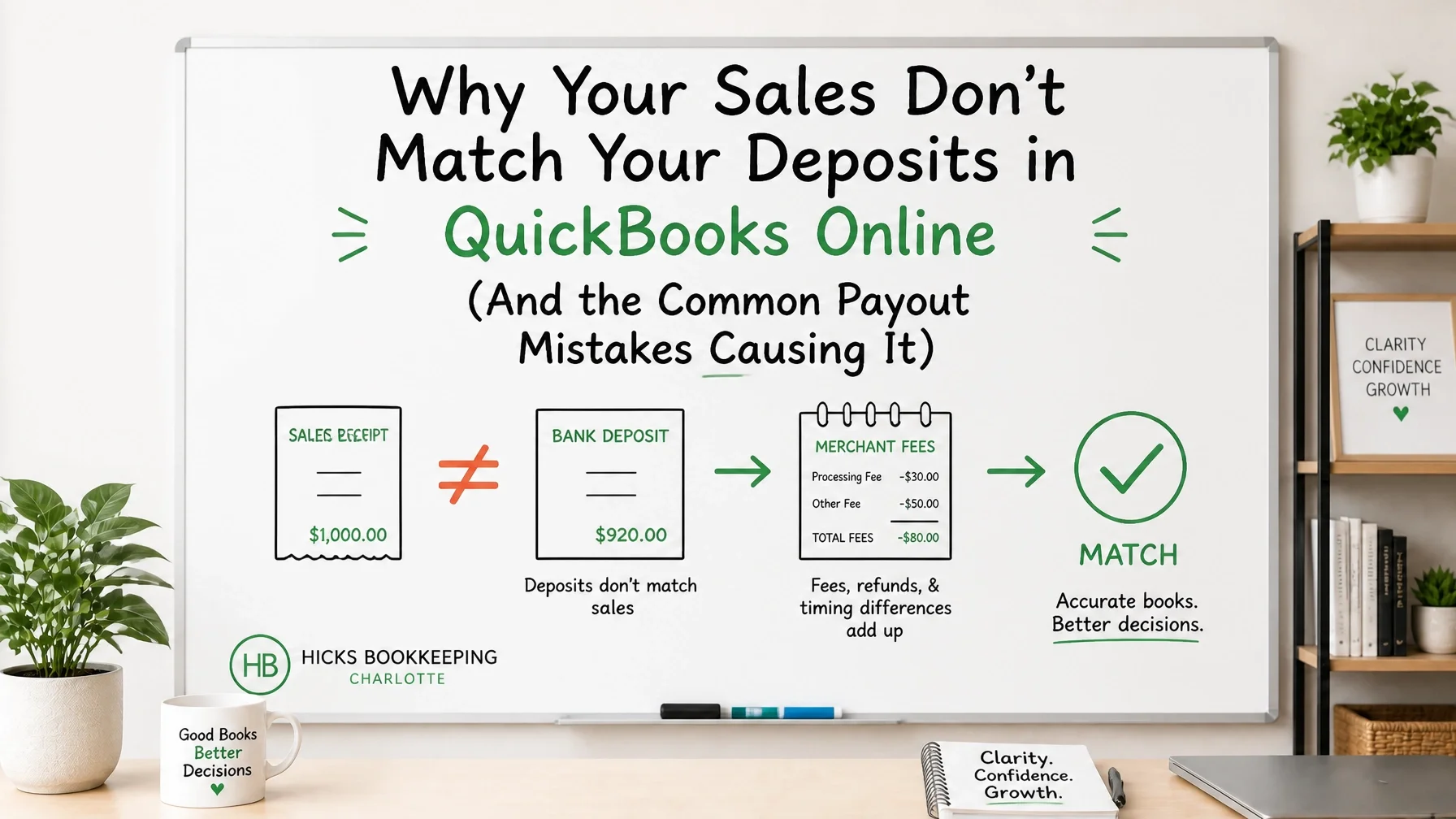
Why Your Sales Don't Match Your Deposits in QuickBooks Online (And the Common Payout Mistakes Causing It)
Ever look at your bank deposit and think, “Wait... why is this number not the same as my sales?” You’re not alone. It’s one of the most common frustrations in QuickBooks Online. You make sales, money lands in the bank, and somehow the deposit amount still looks weirdly off. Rude.
Usually, the problem isn’t that money disappeared. It’s that QuickBooks is showing the flow of money in pieces. Maybe the payment processor took out fees. Maybe a deposit bundled several payments together. Maybe the bank feed is daring you to click “Add” when you absolutely should not. For many owners handling small business bookkeeping, this is where the mess starts.

You Could Do Your Own Books. Here's Why You Shouldn't.
Let’s be real for a second. You’re a smart person. You built a business in Charlotte from the ground up, navigated the paperwork, hired people, and figured out how to sell a product or service that people actually want. Compared to all that, clicking a few buttons in QuickBooks Online doesn’t seem like a big deal, right?
We both know you could do your own books. You could sit down every Sunday night with a lukewarm cup of coffee, open up your laptop, and try to remember why you spent $42.50 at that random office supply store three weeks ago. You could spend hours googling "how to categorize a loan payment in QuickBooks" or "why does my balance sheet look like a work of abstract art?"
But here’s the real question: Just because you can do it, does that mean you should?
At Hicks Bookkeeping Charlotte, we’re big believers in the "Bookkeeping Plain and Simple" philosophy. And the simplest truth is this: your time is worth more than the nitty-gritty of data entry.
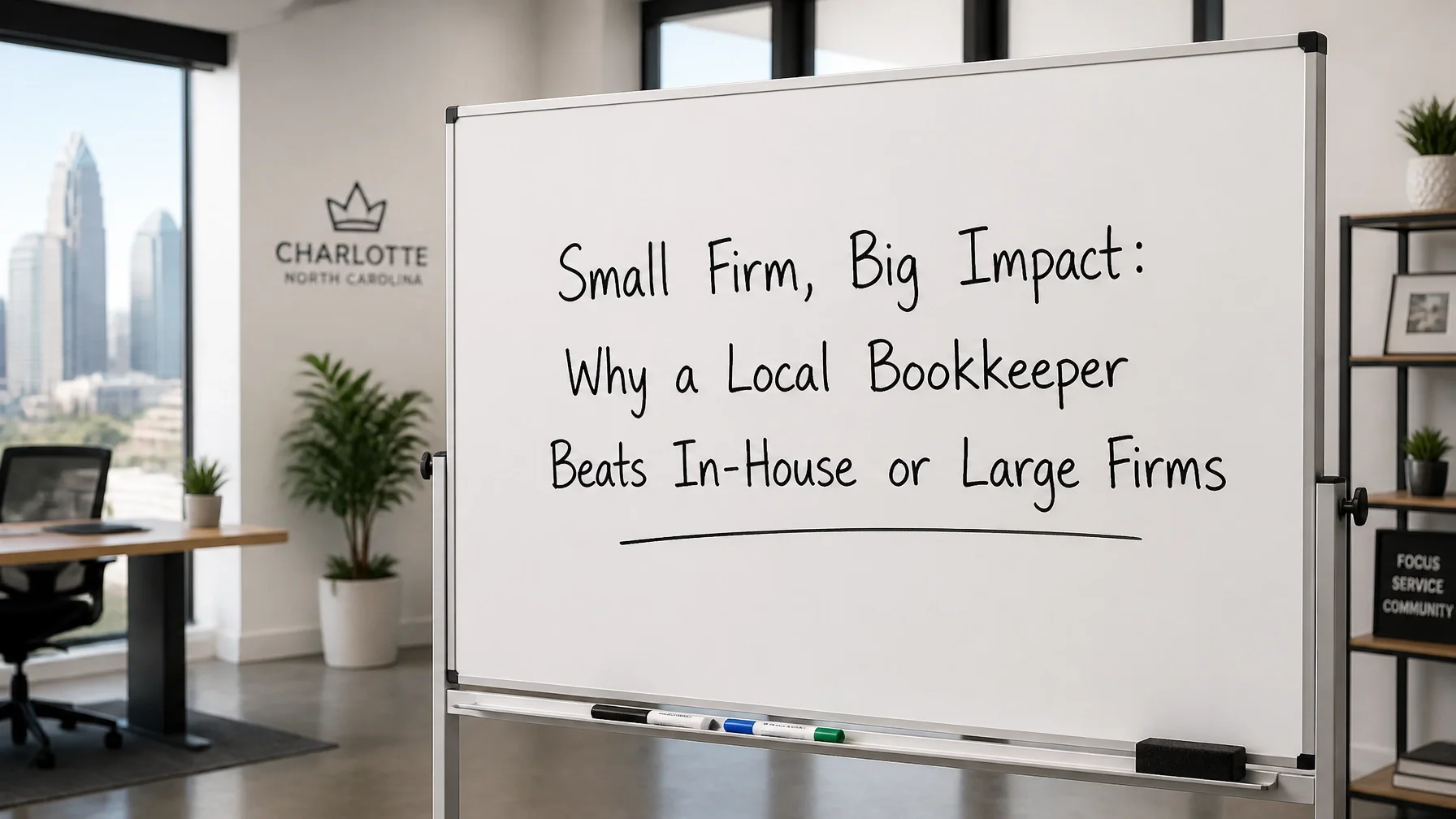
Small Firm, Big Impact: Why a Local Bookkeeper Beats In-House or Large Firms
So, you’ve reached that point. You know, the one where the piles of receipts are starting to look like modern art, and your bank statement is basically a choose-your-own-adventure novel. You need help. But who do you call? Do you hire a full-time person to sit in that empty desk? Do you call a massive accounting firm with a skyscraper office? Or do you go to a high-priced CPA?
Actually, for most businesses, the answer is simpler, cheaper, and a lot more personal. Choosing a local bookkeeper in Charlotte can be the smartest move you make this year. At Hicks Bookkeeping Charlotte, we believe in keeping things plain and simple. We aren't a faceless corporation, and we aren't a high-overhead agency. We’re your neighbors, and we’re here to make your life easier.
Let’s dive into why staying small and local is the "big impact" move for your small business bookkeeping.

The DIY Ceiling: How to tell when 'doing it yourself' is actually costing your business money.
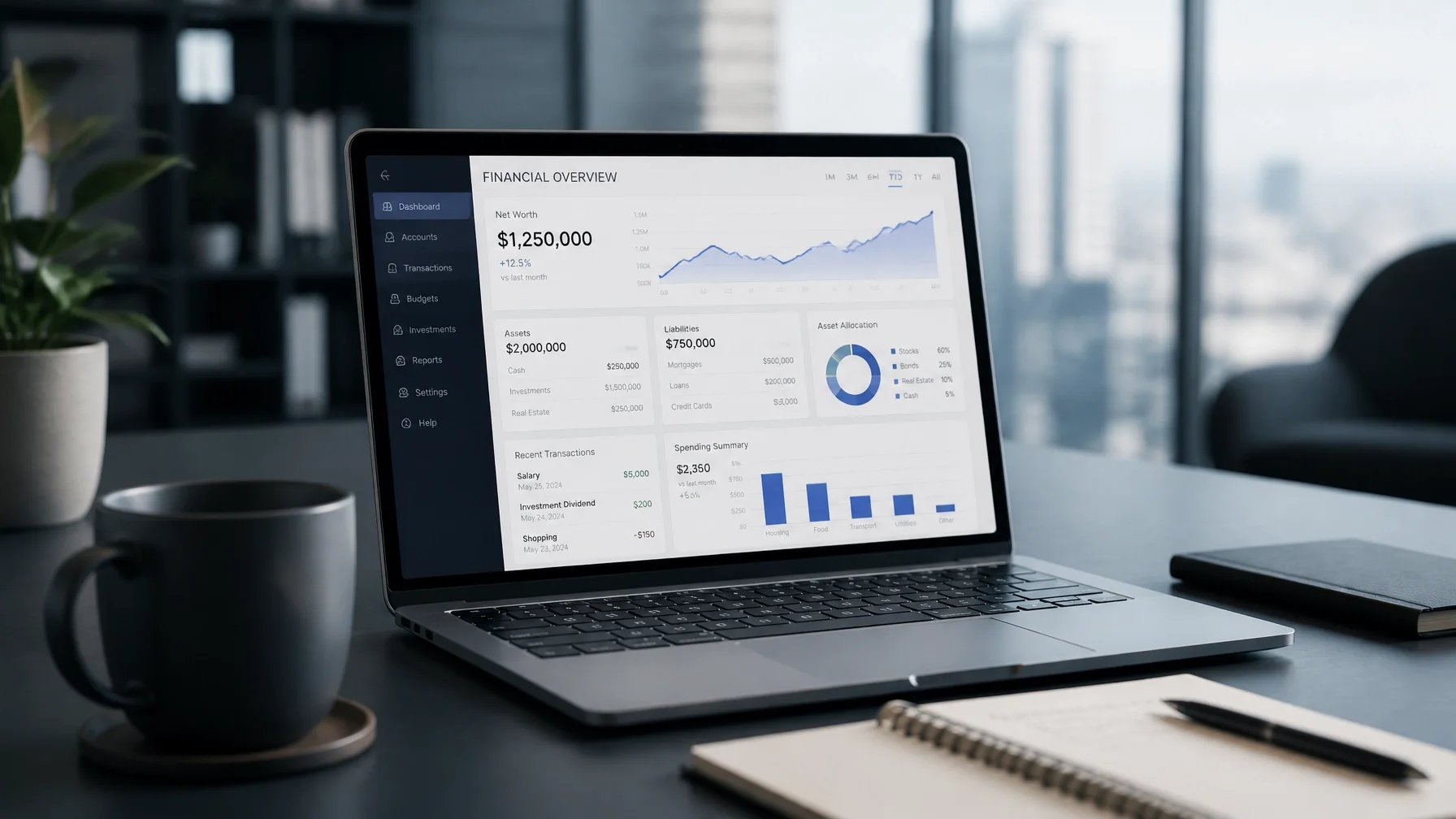
Mid-Year Reset: Why June is the Best Time to Fix Your 2026 Books

Is It 'Organized Chaos' or Just... Chaos? 3 Signs You Need a Financial Cleanup

7 Mistakes You’re Making With Your Bank Feeds (And How to Stop the AI Chaos)
The First Quarter is Almost Over Already: Are Your Books Ready for the Next?
Is a Fiverr Bookkeeper Really Saving You Money? The Pros, Cons, and Hidden Costs
Can AI Really Clean Up Your Books? Here's What Still Needs a Human Eye
Basic vs. Advanced Bookkeeping: Which One Does Your Charlotte Business Actually Need?
Ditching the Spreadsheet: Why Your Charlotte Business Needs a Real Bookkeeping System
Cash Flow Reports Explained in Under 3 Minutes
Ever check your bank account and wonder where all the money went?
You had a great month. Sales were up. Invoices went out. Your profit and loss statement looked solid. But somehow, your bank balance tells a completely different story.
If this sounds familiar, you're not alone. It's one of the most common frustrations I hear from Charlotte business owners. And the answer usually comes down to one thing: nobody's looking at the cash flow report.
Let's break this down in plain English, no accounting jargon, no snooze-fest spreadsheets. Just the stuff you actually need to know
Do You Really Need Monthly Bookkeeping? Here's the Truth
Why AI Bookkeeping Still Needs a Human Touch (and a Vigilant Eye)